Your wisdom teeth are supposed to make you smarter, right? So why would you want to remove them? Unfortunately, while increased intelligence would certainly be nice, your third molars don’t really make you any wiser- they just develop when you’re in your late teens or early adulthood when you’ve got a little more life experience under your belt. So, why remove them, then? Here’s a closer look at six very good reasons to take them out, and what could happen if you don’t!
What Are Wisdom Teeth, anyway?
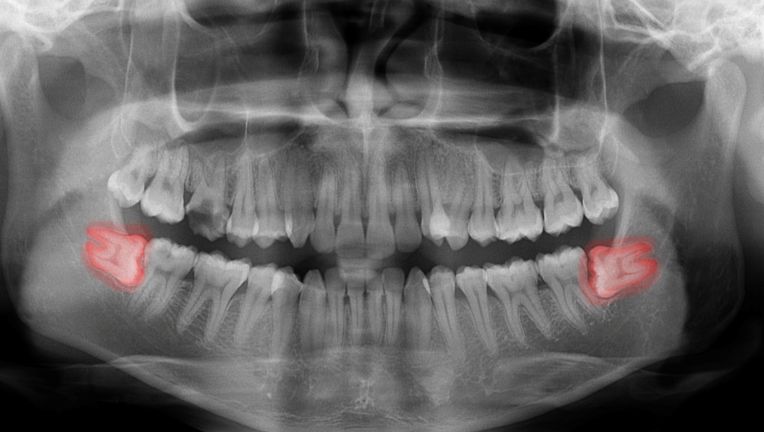
Also known as third molars, your wisdom teeth erupt in the very back of your arches in your late teens to early twenties. Researchers believe that they originally appeared because prehistoric man needed them as replacements due to a raw diet of meats and plant roots. Because they had no tools to cut or cook their food, our ancient ancestors’ teeth were subjected to excessive wear and tear, requiring backup teeth so they could continue eating. Thankfully, they had broad jaws that could support these additional molars, and because they had a much shorter lifespan than we do, they didn’t need them for very long.
Today, however, our jaws are much smaller, and we have many options for making our food softer like different cooking methods and utensils. This puts a lot less strain on our smiles, so the teeth we have can last much longer. Unfortunately, however, most people still get wisdom teeth, and in many cases they’re more trouble than they’re worth and should be extracted before they can cause any damage to your smile.
Shifting Teeth
Although you can get anywhere from one to six wisdom teeth, most people get four, or one on each end of their arches. Unfortunately, because our jaws are smaller than prehistoric man, this can frequently result in crowding. While it may not sound like a big deal since it’s in the back of the mouth, the addition of third molars can throw the alignment of your smile out of order and even cause crowding and tooth breakage if not removed.
Oral Hygiene Challenges
It can be difficult to reach the very back of your mouth when brushing and flossing, even if you don’t have your wisdom teeth yet. Unfortunately, however, once they erupt it can make maintaining your oral hygiene an even bigger challenge. Third molars are not only prone to cavities, but they can also develop gum disease and inflammation in the surrounding tissues. Removing them can make brushing and flossing much easier and more effective, protecting your healthy, necessary teeth from cavities and infections in the process.
Sinus Struggles
Because the wisdom teeth in the upper jaw can grow very close to the sinus cavity, their roots can often cause uncomfortable pressure, abscesses, and sinus pain. Removing them can alleviate this discomfort and help prevent dangerous problems while protecting your teeth.
Future Protection
While you may not have any current issues from your wisdom teeth, there is no guarantee that this will hold true in the future. Issues like difficult oral hygiene, abscesses, and breakage of nearby teeth can all arise from leaving your third molars intact. For that reason, many patients opt to have them extracted before they have a chance to cause problems in the future.
Jaw Pain
The jaw is an often overlooked but incredibly important part of your body. It allows you to smile, speak, laugh, sneeze, and of course eat! Wisdom teeth can cause jaw pain during eruption, as well as from damage to the jaw from crowding. They can also increase your risk of developing dangerous and uncomfortable cysts or tumors. Thus, removing them can alleviate or prevent this type of pain from occurring.
Stem Cell Storage
Did you know that the stem cells in your wisdom teeth can be banked for the use in future medical procedures? Furthermore, because they can be harvested when your third molars are extracted, you won’t need any additional procedures to remove them! If you’d like to store yours for potential use later in life, speak to your dentist about extraction today.
Remember, whether your wisdom teeth are already causing trouble or your mouth seems fine despite them appearing in your smile, it’s important to consider removing them as soon as you can. This will not only alleviate any current discomfort but prevent future problems that could become more painful and expensive later. Thus, if your dentist recommends extracting them, consider the pros and cons! It could be the ‘wisest’ decision you’ll ever make for your smile!
About Our Practice
At Rausch Family Dentistry, our team of caring and talented dentists wants to protect your smile for a lifetime. If you have one or more wisdom teeth that could put your oral health in jeopardy, it may be time to extract them. To learn more about this treatment and to see if yours should be removed, schedule a consultation for wisdom tooth extraction by visiting our website or calling us directly at 770-931-3388.